


Rob (00:37.571)
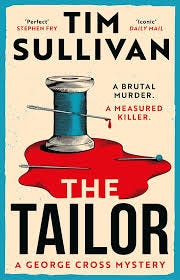
Okay, Tim. Tim Sullivan, thanks so much for being on the show and many, many congratulations on this. This is a proof copy of the Tailor, which l launches today. Many congratulations.
Tim (01:10.658)
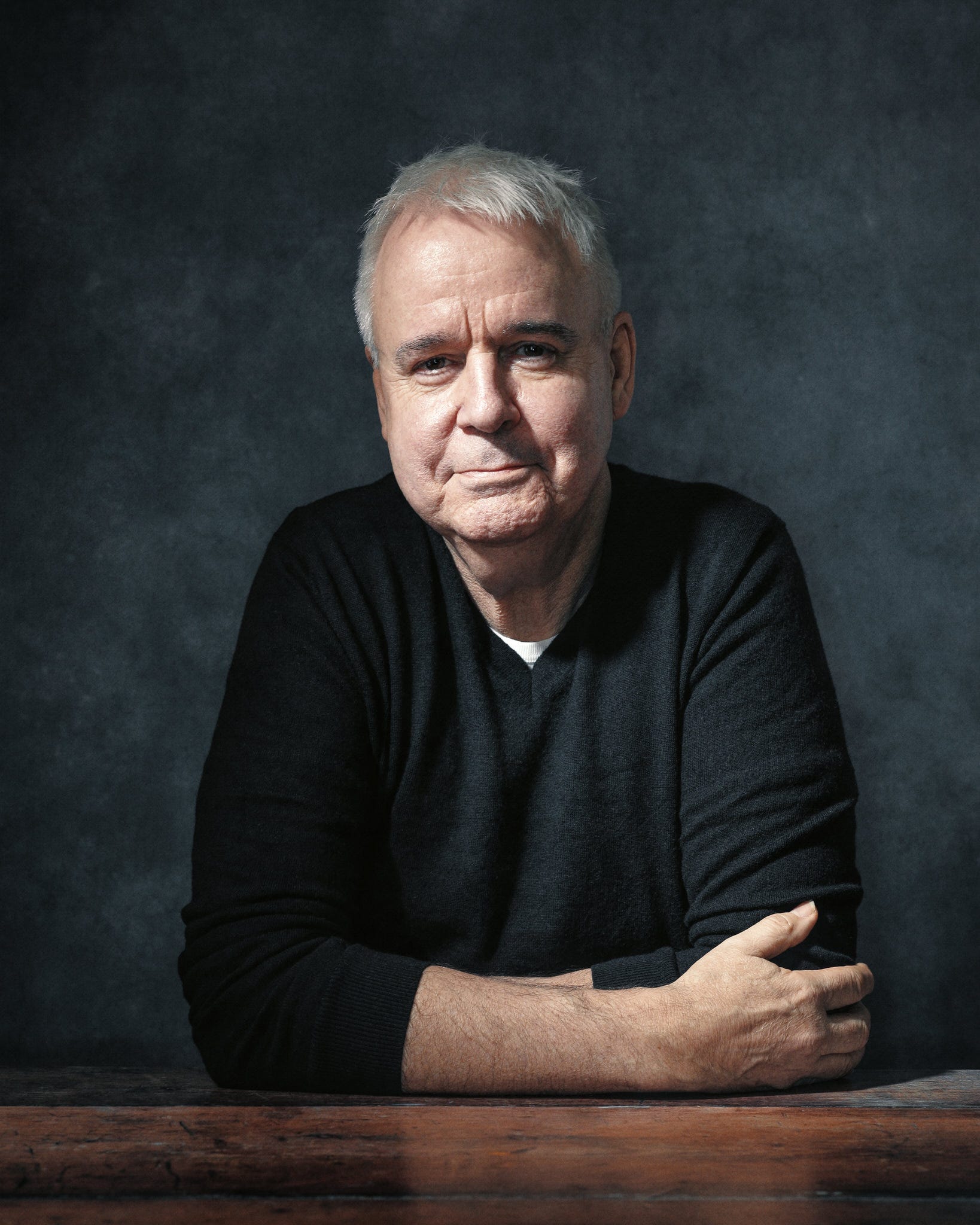
Yes, it is publication day today.
Rob (01:14.605)
And this is a story about how a train leaves Bristol Temple Meads the ten o’clock to London Paddington. and within minutes a man is found dead. He’s a tailor, but who is he? Why has he died and what secrets has he taken to his grave? Pick us up from there, please, Tim.
Tim (01:31.215)
Well, yeah, I I often, I mean, with my books, all of my books are named after the occupations of the, of the victim and, and my detective George crosses on the spectrum and he’s very interested in processes. So in a way it’s kind of, it’s lent me to kind of look at various worlds that interest me and that might be unlikely places for someone to be killed. And bespoke tailoring is, is a fascinating dying art and,
as well as an excuse for me to commission a bespoke suit to do the research. I thought George would, yeah, I thought George would be really fascinated in that world. And, know, often with like my, my fifth book was called the monk. And that was partly because I was a, an altar boy till I was about 16. And you start with the premise of who would want to kill a monk, who would want to kill a tailor. And with the tailors.
Rob (02:06.477)
Tough job.
Tim (02:29.838)
Killing. It’s clearly very deliberate and quite savage. It’s almost like an execution. But why? How does that make any sense?
Rob (02:40.494)
clue which the big clue that which of course we’re not going to give any spoilers away is is it’s almost Christiesque. It is ingenious, isn’t it? Where did that come from? I don’t want to obviously for you to tell us what it is, but but i i it it’s a great idea.
Tim (02:50.902)
Yeah. Yeah. It’s quite, it’s actually quite a difficult book to talk about without giving spoilers away. Yeah. I mean, the thing about George is that George doesn’t have any gut instincts or feelings about crime. He just follows the evidence and he looks at patterns and he looks at behaviors. So for example, if a woman is murdered in her seventies and for 30 years, she’s had her blue rinse done on a Thursday afternoon.
Rob (02:58.584)
Ha ha.
Tim (03:19.938)
And the week before her murder, she doesn’t turn up for a hairdressing appointment. That interests Cross. For him, that could well be pertinent. And it’s the same with the Tailor’s murder. Everyone is concentrating on the way that he’s been murdered. And George just said in this middle of this meeting, where’s his luggage? And everyone goes, what? you talking about? For George, that’s not right.
It’s, you know, it’s out of the ordinary. And it’s those things that that lead him into solving crime in a successful way that he does.
Rob (03:55.693)
Why did you want to pick up on tailoring in the first instance? Is this something that had been brewing up over the years beforehand, or is it a bit of a flash of inspiration when you realised you had another another book to write?
Tim (04:05.772)
No, no, I’ve always been interested in tailoring. And again, I thought it was a George Cross encountering the world of bespoke tailoring and learning about it. I knew would be interesting for the reader, but also a kind of a thing that would fascinate George. I mean, in the patient, he goes to a dry cleaners and he sees a shirt iron, a shirt pressing machine. Have you ever seen one? The ones where they blow the shirt up.
Rob (04:32.334)
No.
Tim (04:34.346)
And not blow it up with explosive, but blow it up with air. And, and he’s fascinated by this and his colleague, Josie Otte gets used to the fact that sometimes he gets sidetracked, but there’s a bit of May Gray in him. like to think I flatter myself in that George will talk to someone about the shirt pressing machine. Otte will go, why is he, we’re trying to investigate a murder here. And he’ll get back in the car and he’ll have two pieces of information that someone working the machine because of his interest in the machine.
They let their guard down and they will spill the beans about a couple of things. Jules Maigret did that brilliantly all the time by sort of posing as a kind of a bit of a fool, but actually being incredibly intelligent.
Rob (05:17.026)
Yeah.
And this is the eighth, am I right in thinking the eighth George Cross book? And and many congratulations on your recent award, the the CWA Dagger in the Library award, which what did that mean? You know, that that’s voted for by librarians, isn’t it isn’t it?
Tim (05:31.832)
Thank you.
Tim (05:36.929)
It was amazing. mean, I was, I was very shocked and surprised and, immensely flattered. I mean, it was an incredible, sort of a list of nominees. so I was, I was absolutely delighted and I’m really glad that borrowers and librarians have taken George to their hearts as much as they have. think libraries is such an important part of the community and, and they’re such easy targets for lazy councils making cuts.
Rob (05:47.478)
Yeah.
Tim (06:06.412)
It’s kind of such an easy target. And the libraries I visit, they’re not just places where people borrow books. They’re community hubs. They’re where people go and meet. They’re where they have friendships with the librarians. They who know their tastes, who, you know, they have different things going on now. They make use of the space in different ways. And I think it’s, you know, it’s not just a question of people going there to borrow books anymore. It’s so much more important. And, and, you know, they’re an endangered species.
Rob (06:36.322)
Yeah, pubs and libraries really, isn’t it? That’s the the the keeping keeping our neighbourhoods together in a in a way. and so to win that award, you know, you you had to have written a series with a great big character here, George Cross. And just just what do you think it is about him? that that people have taken to heart, that people want to read more about him again and again.
Tim (07:02.99)
I think it’s a few things, as I said, because he’s on the spectrum. He, he’s very dogged and patient in following evidence and nothing more than that. And I think that he’s got enormous integrity. People with, he’s got asper, what we used to call asperges, but now it’s called ASC. And often people on the spectrum have a need for things to be right, to be done in the right way.
So he’s a great advocate for protocol, but also the need for things to be right is perfect for a detective because he needs to solve the crime to make it right, to provide justice for the victim and, also meet out justice for whoever’s perpetrated the crime. So I think that he’s got no side to him, George. What you see is what you get. And he’s got great integrity and vulnerability. And I think the, the audience, the, the readers really liked that.
There’s a line in the first book, The Dentist, which I think sums him up really well. They go to investigate a retired detective. And as you know, retired detectives hate having their cases reopened because number one, tells them they’ve done a bad job, possibly. Number two, it makes them feel really old because new generations coming along and having a look. And George goes out and he’s not been treated well by this man who was his boss when he first joined the police force.
Rob (08:12.35)
technically because you know the time hate having their cases re owned because number one it tells them they’ve done a bad job. Number two it makes them feel really old.
Tim (08:32.878)
George rings the doorbell and the man opens the door and goes, it’s PC odd. To which George replies, actually it’s DS odd now. And Otty finds this incredibly funny. George doesn’t, he’s just simply correcting the mistake in his rank. And that’s what I love about George, the sort of, the way he goes about things. Really, really I think makes him quite endearing.
Rob (08:38.243)
odd to which Todd replies actually is DS odd now. And all he finds is incredibly funny.
Rob (09:01.115)
And he’s got a lovely interplay with his parents in this book as well, hasn’t he? The the the elderly parents who weren’t together. He was a you know, the mother who abandoned him, they’re s together, but it’s a bit fractious. And it’s just it that’s that’s a nice little element that brings a bit more humanity to w what could other be you know, he’s there facing the some the same personal pressures that that so many people, so many of us
Tim (09:15.244)
Yeah.
Rob (09:29.347)
Endure.
Tim (09:29.644)
Yeah, I think over all the books, there’s this overriding arc of character development. So in the first couple of books, the mother isn’t around and George wants to find out why she left them. And his assumption is it was because of his autism. And he wants to go and find her to say to her, look, I’m all right. You made a mistake. I’m fine. I’ve turned out really well.
But George being George, what he doesn’t understand when he does this is that she might then want to have a relationship with him. It doesn’t occur to him at all. And this is a bit of a shock and it takes a few books for him to kind of work out how this plays in his life. And I think those, you know, with readers, know, he’s got, George has got a little circle of friends around him. He just doesn’t realize it.
He’s got the local priest where he practices. He’s a brilliant church organ, self-taught organist, and he maintains his friend’s organ, but he refuses to play in any religious services because being an atheist, he thinks it would be an act of great hypocrisy. And he’s got his father and he’s got his colleagues. And I think people like to come back to the books because they’re coming to a world they know about and they want to catch up.
with the people surrounding George. And in a funny sort of way, the reader, to an extent, sees George through these other characters, which is very helpful.
Rob (11:05.73)
Yeah, it is. And and talking about the other characters, I mean the the big thrust of course in this book is who’s killed the tailor. And he’s got a wife who’s a bit suspicious. There are some other people who turn up as well, who are in a a village near near near Bath. how when you started writing the book, do you do you plot it in a advance or do you feel your way through it and and learn when everyone else learns who the killer is?
Tim (11:30.861)
Yeah.
Tim (11:35.151)
Yeah, exactly right. I don’t, don’t plot at all. So here I decided I wanted to kill a tailor. I knew nothing about him. I knew where I was going to do it. The time I did it, I didn’t know who had done it. I never know all I have as a body. don’t know who they are, whether they’ve got family, anything about them. And I then set about finding out and I don’t know who’s done it. I’m just writing next year’s book. My books tend to be around about the 90,000 word mark.
And I’ve got to 70,000 words and I just found out one of the killers last week. And I think the advantage of this is that I’m finding my way through with George or George is finding his way through. it means that we’re never ahead of the reader. It’s very much an organic process. We can’t be ahead of the reader because we don’t know any more than they do. I went to a, a, you know, what do you call them? An event once where someone put their hand up and said,
I could think the case of the politician. Oh, I knew who did it on page 142. And I went, well, congratulations, because I didn’t. So you’ve done some pretty neat work there.
Rob (12:44.95)
You do do some research though, so you did some research into the bespoke tailoring here. Just tell us a bit about that. Because there is a tailor or there was a tailor anyway on Park Street, which in Bristol. Yeah.
Tim (12:51.682)
Well, I called it.
Yeah, I spoke to them. Vittori. Yeah, I spoke to them and they had a fantastic story about, I don’t know whether it was a grandfather or a great grandfather or someone in their family who was, you know, their fifth, sixth generation tailors and the family comes from Sicily. And back in the day, it was illegal to take money out of Sicily, to take currency out.
Rob (13:11.65)
Yeah. Yeah.
Tim (13:22.198)
And so for a while, lot of members of the Sicilian Mafia who were dealt with by the, tailored for by the Vittori family had suspiciously large shoulder pads because they were all stuffed with cash.
So I spoke to them and in fact, Richie Charlton, who did my suit, he knows the Vittori family. So it’s all quite a small world, but they’re still there on Park Street.
Rob (13:48.407)
Yeah, is that that’s not the Torito family, is it? Mike Torito? Yeah. Yeah. He’s he’s actually my neighbour as well. He lives two doors down from me. Yeah, yeah, great guy and a master. I’ve been into his tailors and the it’s beautiful, isn’t it? If you were to to if you were filming there, it would just look so it just it’s so evocative, isn’t it? It’s beautiful.
Tim (13:51.566)
Sorry, sorry.
Tim (13:56.779)
extraordinary. Sorry to get the name wrong.
Tim (14:10.22)
Yeah. Yeah. I didn’t go and see them because by this stage, I’d already commissioned a suit from Richie and I felt it would be a bit rude to go and research and not commission a suit from them. Sorry, what was the name again?
Rob (14:26.318)
Torito, Mike Torito. Yeah. No. And Bristol, as ever, is a a key part of here. And just to name check some of the places that that are that are that are here, of course, you’ve got central Bristol, you’ve got Bishopston, which is where the tailor had lived as well. You’ve got Clifton. There’s an industrial estate in Brislington. There’s even Molly’s Diner in Cribs Cause where he gets a couple of shouts out.
Tim (14:27.429)
That’s Apologies for getting it wrong.
Rob (14:52.704)
As well. I mean, d do you come to Bristol to try and work out where you want to do awful things to people, or do you know the city well enough?
Tim (14:57.954)
Yeah, I do. Yeah. Yeah, I do. And in fact, the next book, The Murder Takes Place in Bishopston, I discovered a really fantastic building there. And I thought, yeah, this will do. yeah, I know Bristol pretty well, but I think it’s always good to, you know, when I did The Teacher, I went out to, you know, near Avonmouth to those little villages on the estuary to look at them.
You know, there used to be great places where tidesmen used to live because they used to pull the boats up into Bristol Harbor. But of course, as soon as Avenmouth started, all of that died off. So those are fantastically interesting communities. And I think, you know, as I always say to people, research is free. I mean, it’s fabulous. It’s a wonderful thing. I didn’t come across research till about 10, 15 years ago. And I thought, why haven’t I been doing this all my life? Why have I been making stuff up?
It’s so much easier to kind of make it up when you know a backbone of things.
Rob (16:00.662)
Yeah. It’s fun as well, isn’t it? ‘Cause you find out stuff that perhaps sometimes you couldn’t even have dreamt about.
Tim (16:07.372)
No, absolutely you do. You come across stuff that surprises you and that’s always, you know, entertaining and useful.
Rob (16:14.678)
And what what’s your connection with Bristol though? mean you don’t live in Bristol, I don’t as far as I know, haven’t ever really worked in in Bristol. Why why set it here in the west of England?
Tim (16:26.19)
Well, my parents’ families both come from Bristol, originally from Ireland. My father’s family, Ireland via Swansea to Bristol. My grandfather on that side was a print manager at the Bristol Evening Post. My other maternal grandparents, my paternal grandparents lived in Eastfield. And so we were all Bristol Rovers supporters at that point.
and then my maternal ones, I were in cotton, cotton Hill. And, I grew up there as a toddler. I was born in Germany because my father’s in the RF. And then we came back between stations to live in Bristol. And it was kind of rather, they were very poor. My grandparents, both sets of grandparents, both had outside toilets that I remember vividly. I remember the one in Woodland road. I’d always need to go to the toilet after doctor who.
Rob (17:01.517)
right. Yeah.
Tim (17:24.206)
And it was outside underneath in a basement. And I used to terrify me. And yeah. And, my daughter, my younger daughter went to Bristol university and studied in the philosophy department, just up the road in Whitlam road. And just further on, my grandfather had been the night watchman in the old gas works. And I was saying to her, you, you don’t understand how proud your great grandparents would be that you are.
Rob (17:28.814)
It’s more scary than Doctor Who.
Tim (17:54.383)
400 yards from there, really sort of almost slummy basement flat, and you’re going to university here. It’s fantastic. And then, yeah, so I was sent away to a dreadful boarding school in Somerset, Catholic boarding school with a horrendous headmaster. He was dreadful drunk and...
Rob (18:04.908)
Yeah. And you y you went to school here as well? Yeah.
Tim (18:19.97)
There should have been included. You had seven Alsatian dogs all named after Wagner operas. That should have been included to someone. Anyway, I ran away four times and was eventually moved to Clifton, but I did kill the bastard in The Teacher, my sixth novel. So I got revenge. But yeah, I then went to Clifton where I was very happy from the age of I was sent away originally at nine. So from the ages of 11 till 17, I was at Clifton and very happy there.
And, you know, have a, have a great fondness for Bristol.
Rob (18:52.876)
And w what what is it about the city that makes it a good setting for crime?
Tim (18:58.932)
Well, other than the center, course, which, you know, unfortunately the planners in the sixties did more damage to the center of Bristol than the Lefouette, to be honest. Not that I’m original in saying it. For Georgia, I I love Bristol. know it well. You know, know Clifton really well. What a beautiful place that is. But I know, you know, I was there. I’m that old that I saw the SS Great Britain being towed down. We all went to the gorge and watched it go under the bridge.
Rob (19:23.788)
Yeah.
Tim (19:28.238)
We used to have to go on these old buses to beggars bush across the bridge to play sports. You know, I’ve gone across that bridge so many times. You know, one of my murders in Scion Hill in the politician where, you know, we used to pass. And for George, because of who he is and how he is, I felt that a big metropolis like police force like London or Manchester or Birmingham, he wouldn’t really cope as well as he would in Bristol. So in the end, you know,
I think it’s great to write about somewhere you’re fond of because it will come out.
Rob (20:03.626)
Yeah, it really does. And so picking up on your journey to get here, after going to Clifton College you went to university, but you didn’t follow in your dad’s your dad’s dreams for you to be a I think a lawyer, wasn’t it? But y you you went to right, okay. Yeah. But you were you wanted to be in T V, did you?
Tim (20:19.246)
think they were his dreams for himself, to be honest with you. It laid off on me because he never did it.
Tim (20:27.5)
I wanted to be in TV and film. mean, my great ambition at the beginning was to be, you know, a big Hollywood film director. And I almost got there. I became a Hollywood screenwriter. I made a movie. I’ve written four or five. Yeah. And it was great. I’ve had a really wonderful, quite eclectic career. I started writing for the director, Derek Jarman, just after he had made The Tempest. And then I got a job at Granada as a researcher. And while I was, I got that job by being a
chauffeur on Brideshead Revisited. And I met the producer, Derek Grange, and I went on to write two movies with him, A Handful of Dust and Where Angels Flee to Tread. And, you know, then I became a director on the great scheme they used to have, the Granada director scheme. And I ended up directing Coronation Street and Sherlock Holmes with the late great Jeremy Brett, who for me is still the definitive. Yeah. So, yeah, so I had a very...
Rob (21:00.216)
Well.
Rob (21:20.874)
Yeah, those were the classics. Yeah. What did you learn? What did you learn in that experience when you’re let’s take ‘cause this is a crime podcast, Sherlock Holmes. What what did that teach you about writing, about the beats, about the rhythm and about
Tim (21:37.069)
I think, I think two things, two important things were structure and pacing. And also, you know, Jeremy, Jeremy was an object listening character and, all good crime fiction has a really strong central character. People don’t read crime fiction if it’s just about the murder or the plot. They want to know about the detective. They want to know about the protagonist.
They want to love or hate him or her. and, and I learned that from Jeremy, Jeremy was, you know, God bless him. He was slightly sort of bonkers at times and would really push the envelope. as far as the portrayal of, of, of Holmes was concerned and your job as a director was to let him go as far, probably a bit further than you thought was sensible and then rain him back.
because his instincts were so great. And he always had a copy of the collected short stories on set. And he would often flick through, not to check that we were doing things right, but just to go back to Doyle and hear Doyle speak to him about the character. And that was intriguing.
Rob (22:47.288)
Yeah.
Rob (22:54.228)
And y I mean, you’ve worked with Pixar, you directed and Ron directed was it Jack and Sarah as well, didn’t you? So this is you know Yeah.
Tim (23:00.364)
Yeah, I wrote and directed Jack and Sarah, which was wonderful. I love that. One of my one of the great experiences of my career working with that cast.
Rob (23:09.494)
And how does that inform how did working on that inform what you do now?
Tim (23:15.458)
I think when you make movies, you learn to be brave because some decisions are forced upon you in the moment of shooting and you have to think on your feet. But I think what I’ve, you know, when you write a screenplay, a screenplay is like a chameleon. It comes in various forms. When you start, it’s like a pitching document to a producer to say, look, this is a great idea. You want to make this movie. And then when the producer comes on board,
Then then it becomes a casting document. You’ve to make sure all the cast are written attractively enough to attract good names. And then once you’ve done that, it becomes a finance pitch document where you’re out to financiers. So you’ve got to make sure that they can see the appeal of it. And then finally, when the movie, if the movie’s made, it’s like an instruction manual. It’s like the last chance you get as a writer to say, look, this is my vision. Please make it as close to this as you can.
This is how I see it. So what you take from that that are advantages in terms of writing books are scene setting. You’re quite good at scene setting because you’ve got to set a scene and describe it fully so the location manager can go out and find it. You’re really good at dialogue because that’s been your bread and butter for 40 years. And you’re really good at pacing, but in the wrong way.
So what you find and I found when I first started writing books was I was guilty of my pacing, my rhythms being too episodic. I had more time. I had to take more time. I could hold things back. Things weren’t as urgent as they are in film and TV. So that was a really big learning curve. But I think the main thing that you take that applies to both disciplines is the
Rob (24:53.315)
Right.
Tim (25:11.694)
The vital importance of narrative drive. Narrative drive is everywhere and it has to be. Every scene has to have some element of driving the narrative, whether it’s in parallel, whether it’s beneath, or whether it’s dragging it behind it. So narrative drive was a thing I learned a lot.
Rob (25:31.997)
W I spoke and there’s a previous episode of this podcast with Linda LePlant, who’s done both as well, and she says the great benefit of books is you can have as many helicopters as you want. You can have there’s no budget, is there? It’s just you and a page, you can do what you want with it.
Tim (25:44.879)
Yeah. Yeah. Yeah. And you know, I’m, I’ve worked in animation, you know, I worked on flushed away. worked for a year on Shrek four. I just worked on a huge movie, my little pony. And you know, on that, you know, there are restrictions there because you know, you’re writing when you think, oh, it’s great. You know, it’s all computer generated and you go, okay, so basically I want to have a, this castle and they go, no, no, no, stop. We haven’t built a castle. And go, what do mean you haven’t built a castle? We’re not building anything. No, no, no. When you ask for a castle.
A team of like 200 people have to go into computers and create that castle so it can be filmed inside and out. Hundreds and hundreds of hours, millions of dollars in that castle. It’s probably cheaper to build one on the Shepperton backlot than it is in a computer. It doesn’t occur to you.
Rob (26:32.174)
Yeah.
Rob (26:37.026)
So why did you make the the the jump? it was was it twenty twenty the first George Cross book came up?
Tim (26:42.86)
Yeah. I mean, my joke, I preempted is that, you know, I just worked on My Little Pony and the only direction to go from there was crime fiction. But that’s a joke. You know, unless you’re in the top 1%, which I wasn’t quite of successful screenwriters and directors, it’s an ageist business as you get older, you know, the phone or the emails taper off a bit.
And the TV and film world is in such a state of flux. No one knows who is watching what, when, how, where, and everyone’s second guessing technology they don’t understand. AI is hanging over everyone. And so I just suddenly thought I’d been interested in autism for like 20, 30 years. I’ve done quite a bit of research and I thought I really want to write a book centered around this. And then it just made complete sense for the old.
for the character on the spectrum to be a detective. And in a sense, know, George Cross fits into a long tradition from August Japan to Sherlock. I mean, I think we put Poirot on the spectrum, you know, so that way of looking at life, that way of having your brain wired lends itself brilliantly to solving crime and murder.
Rob (28:02.606)
And your first couple of books were self published, weren’t they? yeah, what was that like? How are ‘cause that’s I mean, that you have such independence, don’t you, and such scope, but also it’s such a lot of work to do that.
Tim (28:05.046)
Yeah. So.
Tim (28:13.654)
Yeah, it was a lot of work. mean, but the reason was, you know, I, I sent the first sort of 50,000 words to my agents agency that I’ve been with for 40 years and they turned me down. And I thought to myself, well, obviously 40 years isn’t long enough, but also, you know, there’s no such thing as loyalty in the agenting world. And I went to another couple of agents and they both turned me down and they both asked me, they loved the book, the dentist, but they both asked me if I was autistic.
And I said, no, I wasn’t. And they then asked me if my children were autistic, which I thought was a bit impertinent. And they told me that I would know publishers would touch me because they felt all readers would shun me because I was guilty of what was called neuroscientific appropriation. And I just thought, I’d never heard of this. And I thought the world has gone mad. So I said to my wife, Rachel, all right, what I’m going to do, I’ve done so much work and I think my portrayal is authentic. It’s not like.
It’s not an accessory like Morse’s Jag. George Cross’s condition is his gift. What I’m going to do is I’m going to self publish it. And if the autistic community push back, I’ll stop. I’ll just, I’ll just bin it and do something else. And quite the opposite happened. Over four months, we had just 16 weeks. We had 175,000 downloads and both of us were in the TV film. Well, we didn’t know whether this was normal.
Rob (29:36.674)
You’re kidding? Wow. That’s amazing.
Tim (29:42.531)
whether it happened to everyone. So then we sort of went looking for PR and through that, you know, the figures got out and then I got a publisher. Initially, I was resistant, but I’m really glad I did. but self-publishing teaches you a lot about the business. But yeah, it was forced on me. It wasn’t something I chose to do.
Rob (29:42.786)
Yeah. It’s not.
Rob (30:09.206)
And so the last six have been with a a a publisher, haven’t they? I mean what w what crimes or have there been any crimes that have inspired you along the way or you’ve taken a little bit of this or a little bit of that, or have you seen any detectives?
Tim (30:23.468)
Yeah, I based, I write short stories, which I make free for, the subscribers to my website and then the publisher also sells them. I can’t remember the case now, but the second one I wrote is called the ex-wife and it’s based on that bloke, who murdered. You’ll remember this because you’re so clever about crime. He murdered his second wife by throwing her down the septic tank outside their house.
with their dog.
Rob (30:54.904)
That th she’s the author, she’s the children’s author.
Tim (30:57.878)
She was the children’s author, but he had also murdered his first wife and his first wife’s family had left her brain to science. And it was through that that they proved that he killed both women. And so I based the ex-wife on that because it just seemed such a kind of dreadful crime. Sometimes when you’re writing murders, you know, you do start thinking to yourself, why do people do this?
Rob (31:02.36)
Mm.
Tim (31:27.33)
And of course, as a crime writer, you’ve got to know why, but you’ve also got to believe it.
Rob (31:32.738)
What is it about crime that intrigues you, makes you want to write it, and also makes hundreds of thousands, or in your case now millions, of people want to read it?
Tim (31:47.789)
I think it’s the complexity and at the same time, the simplicity. You can overlook the simplicity of an act of murder. But I think people like to read it because they like a sense of balance by the end of the book. They like a sense of restitution. They like a sense of the world being put to rights and they like going along on that journey, having their own theories proved or disproved.
as they go along. mean, I’m not golden age author. I don’t deliberately write to challenge to send out red herrings and deceive the audience all the way through. My red herrings are organic. I find them as George finds them. Our red herrings, he said grandly, I know George is fictional, but our red herrings are genuine leads of investigation that he follows. And therefore they have a bit more grounding to them.
And I think, you know, people love to not know what’s happened at the beginning and find out why. think that’s the prime thing. And I think also people are amazed at the links that bad people will go to and they can read it from the safety of their own home.
Rob (33:02.956)
Yeah. I think a really good segment for everyone. Yeah. There’s something thrilling about it, isn’t there? It’s often sometimes something thrilling. And also something I think every day, often in i e for example in the tailor, here’s a guy who was leaving his office, he’s catching a train to London. There’s something very everyday about it, and then something awful happens during a very relatable thing.
Tim (33:09.1)
Mm.
Tim (33:26.113)
Mm.
Rob (33:27.764)
and what research you mentioned research earlier, what do do you find yourself going down YouTube rabbit holes or or reading reading books about it or or do you have advisors in what ways do you go through things to try and keep it as so the procedure isn’t too out of kilter with with real life?
Tim (33:51.267)
Yeah, I’ve got a couple of friends in the police force, but I try not to be too adherent to, know, slavishly adherent to police procedure. I have a couple of friends, friendly pathologists who advise me. have a Casey who advises me. and, yeah, but I love doing the research and as I say, with the tailor, the easiest thing was to commission a suit. so my discussions of making the suit, what I wanted.
then seeing the process happen, how it was put together with base stitching and how the canvas was done, know, all informed how just the measuring is done, what they measure, how they do it, how they look at your body. If you’ve got one shoulder that’s half an inch lower than the other or your hips at the same angle, all of that really fascinated me and would fascinate George.
And I think there’s also something wonderful about learning about people are really good at something. You know, really good at at their job. yes, and you find out such a wealth of, you know, I found out stuff that George loved about, you know, in tailor shops, you know, when they when they make these clothes, when they have offcuts of material, those are called cabbages. I just love that, you know. And so there’s all sorts of, you know,
Rob (35:14.55)
Yes. Yes. It’s good.
Tim (35:18.796)
wonderful language like that.
Rob (35:21.878)
And just what’s it like slipping on a bespoke suit?
Tim (35:25.294)
It’s fabulous because it, think, where do you notice it most? I think it’s the shoulders and the armpits. When you put the jacket on, it just slips on. It’s just like, you know, it’s just, it’s perfect. I mean, the cliche, it fits like a glove. Um, but you know, the, the, thing is don’t put on too much weight, um, because they literally are, you know, made to fit like a glove. So if you put on weight, you’re to be in trouble.
Rob (35:32.546)
Yeah.
Rob (35:51.862)
Yeah. So if you put on weight, Yeah, you can lose a little bit maybe, but not put it on.
Tim (35:56.206)
I would definitely lose, definitely lose. You can always lose as a general rule. But yeah, but it was, it’s been a joyous thing to do. And the world of tailoring has been really fascinating to look into. and, you know, my tailors, as with your neighbor and my tailors are on Park Street. So it sort of lends a bit to them.
Rob (36:20.322)
Well, it’s a terrific book. I thoroughly enjoyed it. And how about this for a coincidence? I actually finished reading it a couple of days ago. When I was on the ten o’clock train from Bristol Temple Meads to to to Paddington, there was a bit of drama on that train journey because someone had left a backpack in the cycle storage area and that caused a freezeworn. But nobody was killed.
Tim (36:40.27)
Well, I bet if you finished it you were a bit wary of going to the loo.
Rob (36:45.64)
Yeah, exactly. That’s right. It was. So many, many, many congratulations with this, your eighth with your incredible award as well, the the dagger in the library. And w wishing you the best of luck with number nine and everything else that you do.
Tim (36:55.064)
Thank you so much.
and you, thanks so much. It’s been a real pleasure talking to you.